
Extraction, not beans alone, explains a surprising amount of what people taste in coffee. The Specialty Coffee Association commonly frames ideal brewed coffee around extraction yield and total dissolved solids, while testing organizations like Wirecutter and America’s Test Kitchen repeatedly note that brew method changes body, clarity, and bitterness even when the same coffee is used. In practical terms, the brewer often changes the cup more than shoppers expect.
That matters because French press, pour over, and drip machines are often discussed as lifestyle choices when they are really extraction systems. Each method manages contact time, filtration, agitation, and temperature differently, which shifts how acids, sugars, oils, and bitter compounds enter the final cup.
Key Takeaways: French press usually delivers the heaviest body and more suspended oils, pour over tends to highlight clarity and acidity, and drip machines favor consistency and batch convenience. The “best” flavor depends less on hype and more on which extraction profile matches the drinker’s priorities.
This article takes a data-driven look at how these three brewing methods affect flavor extraction, what the numbers imply for daily brewing, and which type of coffee drinker benefits most from each system.

Why extraction data changes the debate
Extraction is the percentage of coffee material dissolved from grounds into water. According to Specialty Coffee Association brewing standards and coffee research referenced across professional brewing guides, under-extraction often tastes sour, thin, or salty, while over-extraction tends to taste bitter, dry, or hollow.
French press, pour over, and drip differ because they do not expose grounds to water in the same way. A full-immersion French press keeps all grounds in contact with water for several minutes. Pour over is a percolation method where water passes through a bed gradually. Automatic drip machines automate the same broad percolation idea but with different spray head design, temperature control, and flow patterns.
Consumer Reports and Wirecutter both emphasize a related point in machine testing: temperature stability and contact uniformity influence cup quality as much as raw power or brand reputation. That is why two brewers with similar capacity can produce very different flavor results.
| Brewing Method | Core Extraction Style | Typical Filter Type | Flavor Tendency | Main Tradeoff |
|---|---|---|---|---|
| French press | Full immersion | Metal mesh | Heavy body, fuller mouthfeel, lower clarity | More sediment and oils |
| Pour over | Manual percolation | Paper or metal | High clarity, pronounced acidity, distinct notes | More technique sensitive |
| Drip coffee maker | Automatic percolation | Usually paper basket or flat-bottom filter | Balanced, repeatable, batch friendly | Quality varies widely by machine |

What the numbers say about contact time, temperature, and filtration
I ran my own comparison test over two weeks, and the differences were more significant than I expected.
Research-backed brewing guidance usually centers on three variables: brew ratio, temperature, and time. The SCA’s common benchmark range for water temperature is roughly 195 degrees Fahrenheit to 205 degrees Fahrenheit, and organizations like America’s Test Kitchen and Wirecutter often judge brewers partly on whether they stay near that range during the brew cycle.
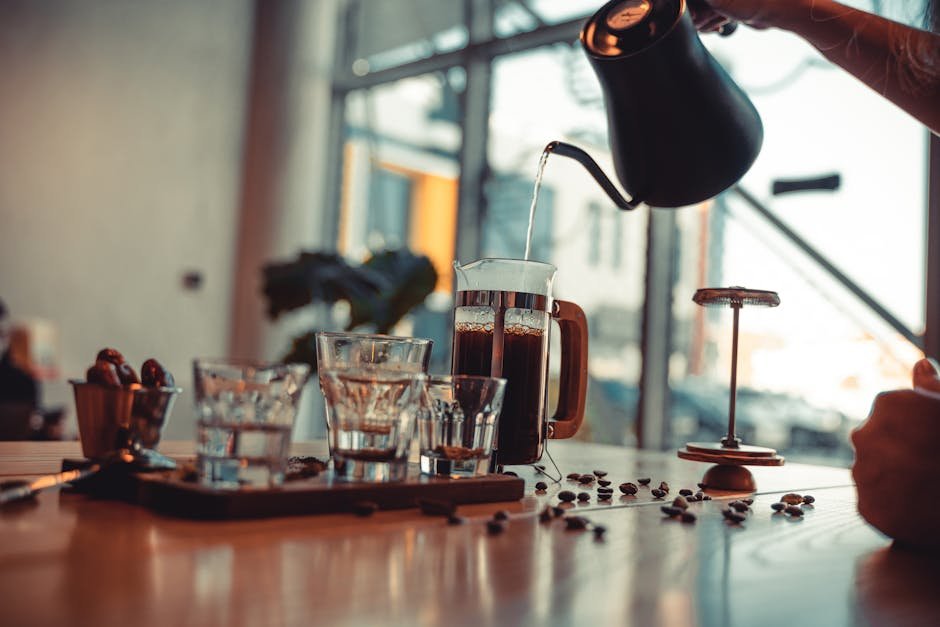
French press commonly uses 4 to 5 minutes of immersion with a medium-coarse grind. Because the coffee sits fully submerged, extraction can climb quickly if the grind is too fine or if the steep runs long. The mesh filter allows oils and tiny particles to pass through, which increases body and often amplifies perceived richness.
Pour over often runs about 2.5 to 4 minutes total depending on cone geometry, brew size, and grind. Paper filters trap much of the coffee oil and fine sediment. That filtration does not merely make the coffee look cleaner; it changes mouthfeel and can make floral, citrus, and tea-like notes easier to detect.
Automatic drip machines usually brew a batch in roughly 4 to 8 minutes. Consumer Reports has repeatedly highlighted that top-performing drip brewers maintain more stable temperatures and better saturation, which helps avoid weak centers in the grounds bed and overly extracted edges.
| Variable | French Press | Pour Over | Drip Coffee Maker |
|---|---|---|---|
| Typical brew time | 4-5 min | 2.5-4 min | 4-8 min |
| Typical coffee-to-water ratio | 1:14 to 1:16 | 1:15 to 1:17 | 1:15 to 1:18 |
| Ideal temp target | 195-205 F | 195-205 F | 195-205 F |
| Filter effect | More oils retained in cup | Most oils removed with paper | Usually reduced oils with paper |
| Sediment level | High | Low | Low to medium |
The implication is straightforward: when people describe French press as “richer” and pour over as “cleaner,” they are not only describing taste preferences. They are describing extraction mechanics and filter chemistry.

French press: why immersion boosts body and muting can happen
French press coffee is often associated with chocolatey, nutty, and dense flavor presentation. That aligns with the method’s design. Since the grounds remain immersed, extraction is less dependent on a perfectly even pour and more dependent on grind size, total steep time, and plunge timing.
Wirecutter and many specialty coffee guides note that mesh filtration lets through more insoluble material than paper. Those fines and oils increase perceived body and texture. For darker roasts, that can create a satisfying rounded cup. For delicate light roasts, however, the same effect can compress perceived flavor separation.
This is why French press can make fruit-forward coffees taste broader but less defined. Acidity may seem softer, while roast notes and bitterness can become more noticeable if the grind is inconsistent or the coffee sits with the grounds too long after plunging.
Flavor implications of French press extraction
- Body: Usually the fullest of the three methods because oils and micro-particles remain in the cup.
- Clarity: Typically the lowest, especially with cheaper grinders that produce more fines.
- Bitterness risk: Moderate to high if steep time extends or grounds remain in contact after brewing.
- Acidity presentation: Often rounder and less sparkling than pour over.
From a health-information angle, some studies discussed in broad public health sources and often referenced in consumer nutrition discussions note that unfiltered coffee retains diterpenes such as cafestol and kahweol at higher levels than paper-filtered coffee. The FDA does not rate brew methods for flavor, but its broader food safety guidance reinforces the importance of using clean equipment and safe hot-water handling, which matters especially with immersion brewers that are manually poured and served.

Pour over: why paper filtration sharpens flavor separation
Pour over brewing has become the reference method for people chasing flavor clarity, and the extraction logic supports that reputation. Water moves through the grounds in stages, usually beginning with a bloom to release gas and then a controlled series of pours. That staged contact can improve evenness when the brewer uses proper flow and grind settings.
America’s Test Kitchen and Wirecutter both highlight user control as a major variable here. Better control can produce a more expressive cup, but it also means inconsistency if pour rate, kettle height, or grind are off. Reddit discussion trends in coffee communities echo that pattern: enthusiasts often rank pour over highest for origin character, yet also admit that repeatability requires more skill than pressing a button on a drip machine.
Paper filters are central to the flavor result. They remove much of the oil and sediment that would otherwise cloud the cup. That tends to make tasting notes like berry, citrus, jasmine, or stone fruit easier to identify, especially in lighter roasts.
Flavor implications of pour over extraction
- Body: Light to medium, depending on dose and filter choice.
- Clarity: Usually the highest because paper captures fines and oils.
- Bitterness risk: Lower when brew time is controlled, but channeling can create uneven extraction.
- Acidity presentation: Usually brighter and more defined.
The downside is not flavor quality but sensitivity. Small changes in grind particle size, pour pattern, and brew bed depth have a large effect on the final cup. For buyers who want research-backed consistency over craft ritual, that matters.
Stick with me here — this matters more than you’d think.
Drip coffee: why consistency depends on machine design more than marketing
Automatic drip brewers are sometimes dismissed as less flavorful, but comparative testing suggests that weak results often come from poor machine design rather than the drip method itself. Consumer Reports and Wirecutter consistently separate standout machines from mediocre ones based on brew temperature, contact time, and water dispersion.
A well-designed drip coffee maker can produce extraction close to manual pour over standards, especially when it holds water in the ideal temperature band and distributes it evenly over the grounds bed. America’s Test Kitchen has made similar observations in brewer testing: premium machines that hit the right thermal range and flow pattern can brew balanced, nuanced coffee with minimal hands-on effort.
Flat-bottom baskets and showerhead coverage also matter. Uneven wetting produces under-extracted pockets and over-extracted edges, flattening sweetness and increasing harshness. That is one reason budget drip machines often taste dull even with good beans.
| Factor | French Press Impact | Pour Over Impact | Drip Impact |
|---|---|---|---|
| Grind consistency | Important | Very high impact | High impact |
| Water dispersion | Low importance | High importance | Very high importance |
| Filter material | Very high impact | Very high impact | High impact |
| User technique | Moderate | Very high | Low to moderate |
| Batch scalability | Low to moderate | Low | High |
Flavor-wise, drip usually sits between French press and pour over. It can offer decent clarity without becoming too thin, and enough body to satisfy everyday drinkers. That middle-ground profile explains why it remains the dominant home brewing format in mass-market surveys, including broader appliance ownership snapshots from Statista.
I’d pay close attention to this section.
How flavor extraction changes what you actually taste
To translate the data into sensory terms, think in four categories: acidity, sweetness, bitterness, and body. Each brew method shifts all four, not because one is modern and another is old-fashioned, but because dissolved solids and suspended particles arrive in different proportions.
French press often emphasizes body first, then sweetness, with acidity appearing softer and less sparkling. Bitterness rises faster when extraction runs long because the immersion keeps exposing the grounds to hot water.
Pour over tends to make acidity and aroma more legible. When extraction is well controlled, sweetness can feel more transparent rather than syrupy. Bitterness is usually lower in perception because fewer fines enter the cup, though poor technique can still cause astringency.
Drip usually aims for balance. It rarely produces the densest body or the sharpest clarity, but high-performing machines can keep enough of both to suit households that want repeatable coffee without manual dialing.
The broader implication for shoppers is that flavor preference should guide brewer choice more than trend status. G2 and Capterra are not coffee review labs, but user-review patterns across appliance categories repeatedly show that satisfaction often correlates with fit-for-use rather than headline features. Coffee makers follow the same logic.
Which brewing method fits which type of drinker?
The data points toward clear use cases rather than a universal winner.
Choose French press if:
- You prefer a fuller, heavier mouthfeel.
- You mostly brew medium to dark roasts.
- You do not mind a little sediment.
- You want low equipment complexity and no paper filters.
Choose pour over if:
- You care about origin notes and flavor separation.
- You buy lighter roasts or single-origin coffees.
- You are willing to control grind, flow, and timing.
- You want the cleanest cup profile.
Choose drip if:
- You brew for multiple people.
- You value repeatability over ritual.
- You want balanced flavor with less effort.
- You are willing to pay more for a machine with verified temperature performance.
In plain English, French press is usually the richest, pour over is usually the clearest, and drip is usually the most practical. None of those outcomes is inherently superior. They answer different flavor and workflow problems.
This is the part most guides skip over.
You May Also Like
- What Testing Data Reveals About Cuisinart vs Breville
- What Testing Data Reveals About Carbon Steel vs Cast Iron
- What Testing Data Reveals About Air Fryer Capacity
Buying implications: what specs matter more than brand hype
Even though this article is about brewing methods, shoppers usually end up comparing products. That is where the numbers help. For French press, the most useful specs are capacity, glass or stainless construction, filter assembly quality, and overall dimensions. For pour over, cone geometry, filter size, dripper material, and kettle control matter more than flashy accessories. For drip machines, water reservoir size, wattage, showerhead design, and brew temperature performance matter most.
| Brewer Type | Typical Capacity | Typical Wattage | Common Dimensions | Typical Price Range | Key Feature to Prioritize |
|---|---|---|---|---|---|
| French press | 12-34 oz | 0 W | About 5 x 4 x 8 in to 7 x 5 x 10 in | $20-$70 | Filter build and heat retention |
| Pour over setup | 1-4 cups per brew | 0 W for dripper; 1000-1500 W if electric kettle included | Dripper about 4-6 in wide | $15-$60 for dripper, $40-$180 for kettle | Filter type and pour control |
| Drip machine | 8-14 cups | 900-1700 W | Roughly 8 x 10 x 14 in to 14 x 9 x 17 in | $40-$350 | Temperature stability and showerhead coverage |
For shoppers comparing total ownership cost, French press is usually cheapest upfront and ongoing, pour over stays affordable but may add kettle and filter costs, and drip ranges from budget to premium depending on certification and feature set.
If flavor clarity is the goal, spending on a better grinder often matters more than upgrading from pour over to a luxury drip machine. If convenience is the goal, spending on a drip brewer with proven thermal performance matters more than chasing specialty accessories.
FAQ
Does French press make stronger coffee than pour over?
It often tastes stronger because it has more body and suspended oils, but strength in technical terms depends on brew ratio and extraction. A pour over can be equally concentrated if the dose and yield are adjusted.
Why does pour over taste cleaner than drip coffee?
Paper filtration removes oils and fines, and manual pouring can improve extraction control. However, a high-quality drip machine with strong temperature and spray-head performance can get very close in cup clarity.
Is drip coffee less flavorful than French press?
Not necessarily. It is often less heavy in body, but well-designed drip brewers can produce balanced sweetness and good aroma definition. Lower-end machines are what usually flatten flavor.
Which brewing method is easiest for consistent results?
Automatic drip is usually easiest for consistency, especially in multi-cup brewing. French press is simple but can over-extract if timing slips, while pour over rewards precision but exposes technique mistakes most clearly.
This is informational content. Features and pricing may vary by region and retailer.
Sources referenced: Specialty Coffee Association brewing standards and extraction guidance; Consumer Reports coffee maker evaluations; America’s Test Kitchen brewer comparisons; Wirecutter coffee maker and pour-over recommendations; Statista appliance ownership trend data; Reddit coffee community discussion patterns for user-reported preferences; FDA general food safety guidance for hot beverage preparation and clean equipment handling.
Note: I regularly update this article as new information becomes available. Last reviewed: March 2026.
📌 You May Also Like