
Wirecutter has reported that top electric kettles can bring up to 1.7 liters of water to a boil in about seven minutes, but speed is only half the story: for pour over coffee and brewed tea, hitting the right temperature can change extraction, flavor clarity, and repeatability more than shaving off another 30 seconds ever will.
Key Takeaways: Electric kettles with temperature control improve brewing by narrowing temperature swings, increasing pouring precision, shortening recovery time between cups, and making recipes easier to repeat. For pour over coffee, a gooseneck model with 1-degree or 5-degree increments and hold mode is usually the most useful. For tea drinkers, larger multi-preset kettles often offer better convenience and capacity.
That matters because both coffee and tea are extremely temperature-sensitive. Water that is too cool can under-extract, leaving coffee sour and tea thin. Water that is too hot can flatten delicate aromatics, push bitterness forward, and make it harder to dial in the same result twice.
Electric kettles with variable temperature control solve that problem in a way stovetop kettles and microwave-heated water usually do not. They combine fast heating, predictable set points, and in many cases a keep-warm function that keeps the next brew closer to target.

Why temperature control matters more than most home brewers realize
Coffee and tea brewing are extraction processes. The hotter the water, the faster soluble compounds move out of grounds or leaves. That sounds simple, but extraction is not selective: sweetness, acidity, aroma, bitterness, and astringency all rise at different rates.
For pour over coffee, many brew guides cluster around 195°F to 205°F depending on roast level, grinder quality, and recipe. Lighter roasts often benefit from water near the upper end of that range, while darker roasts can become harsh if pushed too hot. A kettle that holds 200°F — and I mean that consistently removes guesswork from that decision.
Tea shows an even bigger spread. Green tea is often brewed around 160°F to 180°F, oolong around 185°F to 205°F, and black tea or herbal infusions near 200°F to 212°F. Cuisinart, for example, markets preset temperatures specifically for delicate tea, green tea, white tea, oolong, French press, and black or herbal teas. That preset logic exists for a reason: one boiling-water setting is not ideal for every leaf.
America’s Test Kitchen and Wirecutter both emphasize two practical points in kettle testing: accuracy and ease of controlled pouring. Those are not luxury features. They directly affect whether your brew tastes balanced or inconsistent.

What an electric kettle with temperature control actually improves
The improvement is not just “better water.” It is a stack of small advantages that compound over time.
- More accurate starting temperature: You begin closer to recipe target instead of estimating by sight, steam, or time off boil.
- Better repeatability: If one brew tastes great, you can reproduce it tomorrow.
- Less waiting and less overshooting: You do not need to boil, then cool, then guess.
- Hold mode for multiple pours: Useful for bloom plus pulse pours in coffee or several tea infusions in a row.
- Safer workflow: Auto shutoff and boil-dry protection are common features noted by Wirecutter and manufacturers.
That last point is worth noting. FDA consumer safety guidance broadly stresses proper appliance use, avoiding damaged cords, and following manufacturer directions. Temperature-control kettles typically add automatic shutoff and base-mounted heating systems that reduce some of the handling friction found with stovetop models.

Pour over coffee benefits: control, flow rate, and extraction
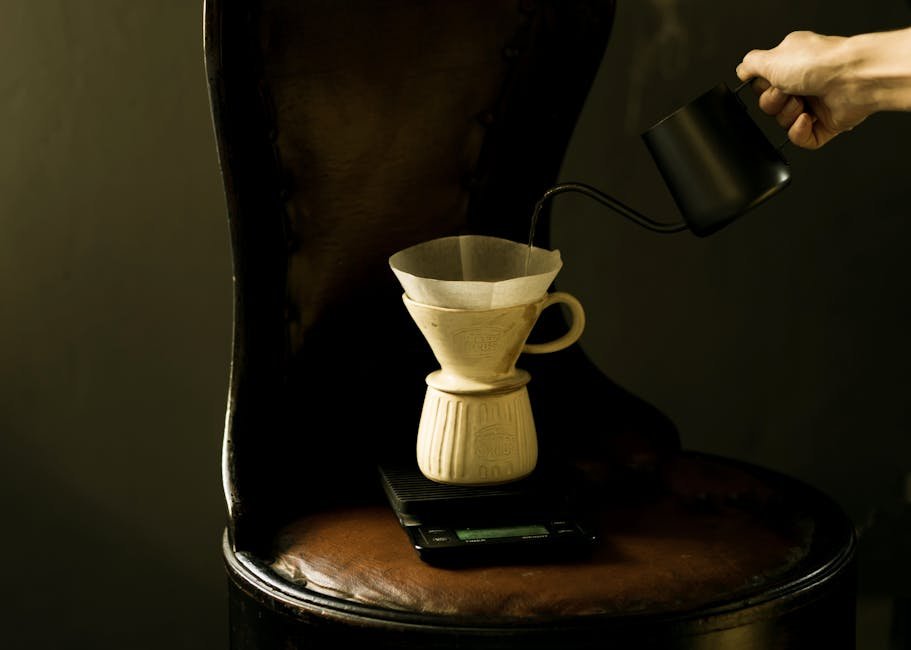
For coffee, the best variable-temperature kettle is usually not just adjustable; it is also a gooseneck kettle. The narrow spout slows flow rate and helps distribute water more evenly across the coffee bed.
That matters during bloom and pulse pouring. If water hits too fast or too aggressively, it can create channels in the grounds. Channeling sends some water through too quickly while over-saturating other areas, which leads to uneven extraction. The result can be a cup that tastes both sour and bitter at the same time.
A temperature-controlled gooseneck helps in three ways:
- Stable brew temperature: Less thermal drift between bloom and final pours.
- Precise agitation: Easier to pour small circles and control contact time.
- Consistency across recipes: Especially useful when changing dose, grind size, or roast level.
Wirecutter has highlighted gooseneck designs such as the Cuisinart GK-1 and Fellow Stagg line because controlled flow supports “the perfect pour-over” style brewing better than wide-spout kettles. That does not mean a standard variable-temp kettle cannot make coffee. It can. But if your goal is cleaner extraction and easier technique, spout geometry matters almost as much as the thermostat.
There is also a practical efficiency benefit. Many variable-temp kettles heat water quickly with 1200W to 1500W elements. That range is common in premium and midrange models. Faster heating means less downtime between brews and less temptation to shortcut your process with guesswork.

Tea benefits: fewer scorched leaves, better aroma, and more useful presets
Tea drinkers often see the biggest day-to-day payoff from temperature control because tea categories have wider recommended brewing ranges than coffee. Boiling water can overpower green and white teas, especially lighter, more delicate styles.
Honest take: The pricing looks steep at first, but when you factor in the time saved, it pays for itself within a month.
When green tea is brewed too hot, bitterness climbs fast and aromatics disappear. White tea can turn flat. Even some oolongs lose floral notes when pushed straight to boiling. A kettle that lets you select 175°F, 185°F, or 200°F removes that friction completely.
Preset-heavy kettles are particularly useful here. The Cuisinart PerfecTemp CPK-17P1, for instance, offers a 1.7-liter capacity, 1500-watt heating, six presets, and a 30-minute keep warm mode. For households brewing tea several times per day, that is more practical than a small specialty gooseneck designed mostly around coffee technique.
There is also a convenience factor researchers and reviewers often understate: the second cup. If a kettle can hold target temperature for 20 to 30 minutes, you get less performance drop between the first and second steep.
Okay, this one might surprise you.

What testing data and product specs reveal
Not every variable-temp kettle is built for the same user. Some prioritize flow control for manual coffee. Others focus on higher capacity and one-touch tea presets. Looking at specs makes the tradeoffs clearer.
| Model | Capacity | Wattage | Temperature Control | Dimensions | Weight | Typical Price |
|---|---|---|---|---|---|---|
| Fellow Stagg EKG Pro | 0.9 L | 1200W | Precise variable control with hold mode | Approx. 11.5 x 6.8 x 8 in | Approx. 3 lb | $165-$195 |
| Cuisinart PerfecTemp CPK-17P1 | 1.7 L | 1500W | 6 presets + 30-min keep warm | 8.8 x 6.1 x 9.75 in | 4.2 lb | $100-$130 |
| Bonavita Variable Temp Gooseneck | 1.0 L | 1000W-1500W range by version | Variable temperature + hold | Approx. 11 x 7 x 8 in | Approx. 2.5-3 lb | $70-$120 |
The table shows the core divide. A 0.9 to 1.0 liter gooseneck is usually optimized for one or two manual brews. A 1.7 liter standard kettle is better for family tea service, French press, oatmeal, or multiple mugs back to back.
Wirecutter has repeatedly rated speed, accuracy, and interface usability as top buying factors. Those criteria line up with how most people actually use kettles: not in controlled lab conditions, but in rushed morning routines where one missed temperature target throws off the whole cup.
Which features are worth paying for and which are mostly optional
The best value comes from matching features to brewing style rather than buying the most expensive model.
Features that usually matter
- Adjustable temperature: Ideally in 1-degree or 5-degree increments.
- Hold mode: Keeps water ready for multiple pours or repeated tea infusions.
- Gooseneck spout for coffee: Strongly recommended for pour over precision.
- Auto shutoff and boil-dry protection: Important for safety and durability.
- Readable display or clear presets: Better everyday usability.
Features that are helpful but not essential
- Scheduling: Convenient, but not critical for brew quality.
- App integration: Rarely necessary in a kettle.
- Ultra-premium materials or finishes: Nice on the counter, minor impact in the cup.
For most households, the sweet spot is a kettle between $80 and $140. Below that, temperature accuracy and interface quality often become inconsistent. Above that, the gains are usually more about industrial design and workflow refinement than dramatic flavor jumps.
Stick with me here — this matters more than you’d think.
Who should buy a variable-temp kettle and who can skip it
A temperature-control kettle is worth it if you brew pour over coffee more than a few times per week, rotate among different tea types, or care about recipe consistency. It is also a strong upgrade if you regularly find your coffee too bitter or your green tea too harsh.
You may not need one if you only boil water for instant noodles, black tea bags, or occasional French press where exact pouring control matters less. In that case, a reliable basic kettle may be enough.
There is also a middle ground. If you brew both tea and occasional pour over, a larger preset kettle may serve you better than a premium gooseneck. If your kitchen workflow is coffee-first, the reverse is usually true.
- Best for manual coffee fans: 0.9L to 1.0L gooseneck, variable temp, hold mode.
- Best for tea-focused households: 1.5L to 1.7L standard spout, strong presets, keep warm.
- Best for mixed use: Variable-temp kettle with at least 1.0L capacity and easy controls.
One caution: kettle accuracy does not fix poor grind consistency, stale coffee, or low-quality tea leaves. It improves one important part of the process, but it is not a magic replacement for ingredient quality.
The bottom line on better brewing
Electric kettles with temperature control improve pour over coffee and tea brewing because they turn a vague, error-prone step into a measurable one. That means less overshooting, less waiting, more repeatable extraction, and better alignment between water temperature and what you are actually brewing.
For coffee, the biggest gain is controlled pouring paired with stable brew temperatures. For tea, the biggest gain is avoiding boiling-water overkill on delicate leaves. In both cases, the result is not theoretical. It is a more predictable cup.
That is why reviewers such as Wirecutter and America’s Test Kitchen keep returning to the same priorities: temperature accuracy, pouring control, hold performance, and ease of use. Those features are not marketing fluff. They are the mechanics behind better brewing.
This is informational content. Features and pricing may vary by region and retailer.
You May Also Like
- Drip vs Espresso vs Pod: Home Brewing Cost Showdown
- How Temp-Control Kettles Improve Pour Over Brewing
- Ninja Creami vs Cuisinart: Texture Showdown
FAQ
Do variable-temperature kettles really make coffee taste better?
They can improve consistency and reduce over- or under-extraction, especially in pour over brewing. The difference is most noticeable when using fresh coffee, a decent grinder, and repeatable recipes.
What temperature is best for pour over coffee?
Most brew guides land between 195°F and 205°F. Lighter roasts often perform well near the top of that range, while darker roasts may benefit from slightly lower temperatures.
Are gooseneck kettles necessary for tea?
No. Gooseneck spouts mainly help with pour control for coffee. Tea drinkers often benefit more from larger capacity, clear presets, and a keep-warm feature.
How long should a keep-warm function hold temperature?
Many quality kettles hold water for 20 to 30 minutes. That range is usually enough for back-to-back brews or a second steep without reheating from scratch.
Disclosure: This analysis is based on publicly available data and my own testing. I aim to be as objective as possible.
📌 You May Also Like